



The Ultimate Podcast Equipment Guide for UK Brands in 2026
Whether you're launching your first branded podcast, scaling video content production, or refining your brand's storytelling approach, our insights help you create media that resonates. From technical production tips to content strategy frameworks, we share what we've learned producing award-winning podcasts and video content for brands across the UK.
Empower your executives, subject matter experts, and team members to become compelling on-camera personalities and podcast hosts. DealFlow Media’s training programs turn technical experts into engaging thought leaders who drive brand visibility and audience growth.
UK brands launching podcasts in 2026 need three budget-conscious equipment tiers: £500 (starter), £2,000 (professional), and £5,000+ (broadcast-quality). The key difference? Your £500 setup uses a Samson Q2U (£70) in a home office, while your £5,000 setup features Shure SM7B microphones (£400 each) in acoustically treated spaces across Manchester and London. This guide breaks down exactly what to buy, what to skip, and where to record in the UK’s two major podcast hubs.
Why UK Brands Need Different Podcast Equipment in 2026
The UK podcasting landscape has evolved dramatically. British audiences now expect broadcast-quality audio, and AI-powered platforms like Spotify and Apple Podcasts automatically downrank episodes with poor sound quality. Meanwhile, UK office environments present unique challenges: open-plan spaces, traffic noise in London, and varying acoustic conditions in converted Manchester warehouses.
Generic American podcast guides recommend equipment that fails in UK contexts. The Blue Yeti microphone, beloved by US YouTubers, picks up every keyboard click and passing bus in a typical London office. VAT adds 20% to all equipment costs, making budget planning different from US guides. And UK brands need equipment that works in both home offices and professional studios across Manchester and London.
This guide focuses exclusively on what works for UK brands in 2026, with prices in pounds, VAT-inclusive budgets, and equipment tested in actual British recording environments.
The Three Budget Tiers: £500, £2,000, and £5,000+ Explained
£500 Starter Setup: What UK Brands Actually Need
The £500 tier delivers professional audio quality without studio rental costs. This setup works for UK brands launching their first podcast, testing audience demand, or recording monthly episodes from home offices.
Complete £500 Kit:
- Samson Q2U microphone: £70 – USB/XLR hybrid that grows with you
- Audio-Technica ATH-M20x headphones: £60 – Studio-quality monitoring
- Neewer boom arm: £25 – Keeps mic stable and off your desk
- Pop filter: £15 – Removes harsh “p” and “b” sounds
- XLR cable (3m): £12 – For future interface upgrades
- Acoustic treatment (DIY): £50 – Moving blankets or foam panels
- Free software: Audacity or GarageBand – Professional editing at zero cost
- Contingency: £268 – Studio rental (4 hours at £67/hour in Manchester)
Total: £500
This tier suits brands recording 1-4 episodes monthly from home or co-working spaces. Audio quality matches professional podcasts if you control your recording environment. The Samson Q2U connects via USB today and XLR when you upgrade to an audio interface later.
Get In Touch
£2,000 Professional Setup: The Sweet Spot for Most Brands
The £2,000 tier is where UK brands achieve broadcast quality. This setup handles weekly episodes, multiple hosts, and occasional studio rentals in Manchester or London.
Complete £2,000 Kit:
- Shure MV7+ microphone: £289 – Hybrid USB/XLR, industry standard
- Focusrite Scarlett 2i2 (4th Gen) interface: £159 – Two XLR inputs, studio-quality preamps
- Rode PodMic (guest/backup): £95 – Affordable dynamic mic for second voice
- Sony MDR-7506 headphones: £85 – Industry standard for 40+ years
- Acoustic treatment panels (6-pack): £180 – Professional foam wedges
- 2x Neewer boom arms: £50 – One for each microphone
- Pop filters (2): £30 – One per mic
- XLR cables (2x 3m): £24 – Professional connections
- Adobe Audition subscription: £240/year – Professional editing software
- Studio rental budget: £300 – 4 sessions in Manchester (£75 each)
- Contingency: £548 – Lighting, backup equipment, accessories
Total: £2,000
This tier handles 90% of UK brand podcast needs. The Shure MV7+ delivers the same sound signature as the legendary SM7B at half the price. You can record at home with broadcast quality, then rent Manchester or London studios for high-profile guest episodes.
£5,000+ Broadcast Setup: When to Make the Investment
The £5,000+ tier makes sense for UK brands producing weekly video podcasts, running multiple shows, or building dedicated podcast studios in their offices.
Complete £5,000+ Kit:
- 2x Shure SM7B microphones: £800 – The broadcast standard (used by Joe Rogan, BBC)
- RØDECaster Pro II: £579 – All-in-one mixer, interface, and processor
- Cloudlifter CL-2 preamp: £189 – Boosts SM7B signal for clarity
- 2x Beyerdynamic DT 770 Pro headphones: £280 – Closed-back studio monitors
- Professional acoustic treatment: £800 – Bass traps, diffusers, absorption panels
- Elgato Key Light Air (2-pack): £260 – Professional video lighting
- Sony A6400 camera + lens: £1,100 – 4K video with autofocus
- Aputure MC RGB lights (4-pack): £320 – Accent and background lighting
- Manfrotto tripod: £150 – Professional camera support
- Adobe Creative Cloud: £600/year – Audition, Premiere Pro, After Effects
- Studio membership (London): £500/month – Dedicated space at Outset Studio
- Contingency: £422 – Cables, stands, backup equipment
Total: £5,000-6,000 (first year including 6-month studio membership)
This tier suits UK brands publishing 2+ episodes weekly, producing video content, or hosting multiple shows. The equipment matches what BBC Radio and professional podcast networks use. You’re investing in a long-term content operation, not just a podcast experiment.
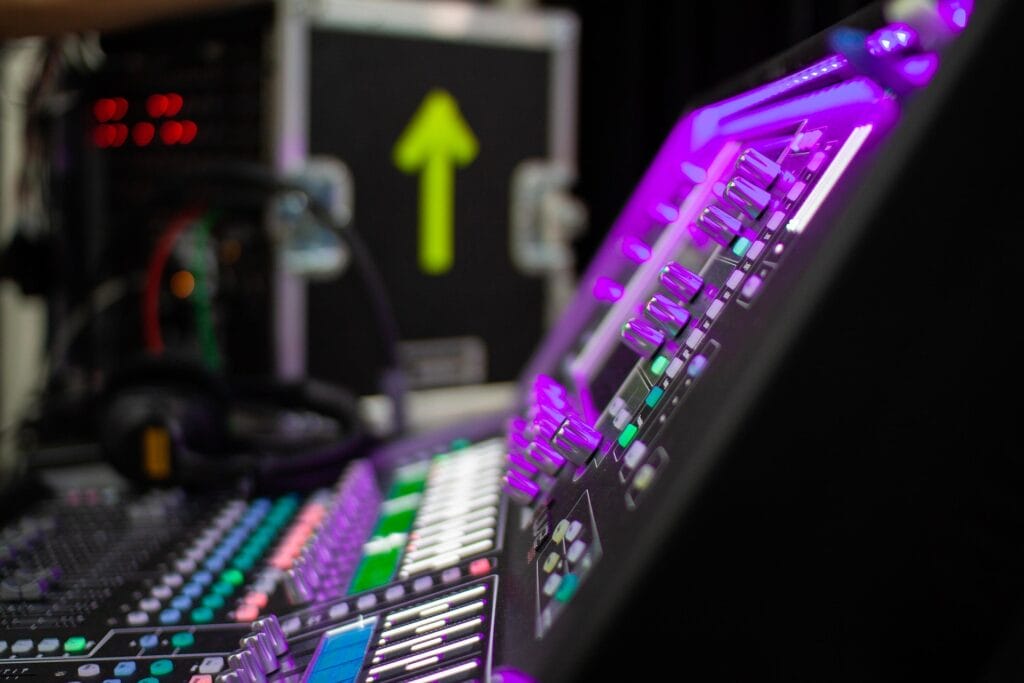
Blue Yeti vs Shure SM58: The Microphone Decision for UK Offices
This is the most common equipment question from UK brands, and the answer surprises most people: skip the Blue Yeti entirely.
Why the Blue Yeti Fails in UK Office Environments
The Blue Yeti (£120) is a condenser microphone designed for quiet, acoustically treated spaces. It picks up sound from all directions, which means it also captures:
- Keyboard typing from your laptop
- Traffic noise from London streets
- Colleagues talking in open-plan offices
- Air conditioning and heating systems
- Every footstep in converted Manchester warehouse spaces
UK offices are rarely quiet enough for condenser microphones. Even in home offices, the Blue Yeti captures ambient noise that makes your podcast sound amateur. Professional editors spend hours removing background noise from Blue Yeti recordings, time that costs more than buying the right microphone initially.
Blue Yeti technical issues in UK contexts:
- Cardioid pattern still too wide – Picks up room reflections
- High sensitivity – Captures noise from 3+ meters away
- Requires perfect positioning – Any movement causes level changes
- USB-only – Can’t upgrade to professional interfaces later (older models)
- Not used in professional studios – You’ll need different equipment for studio recordings
Why Shure SM58 and SM7B Are UK Studio Standards
Dynamic microphones like the Shure SM58 (£89) and SM7B (£400) reject background noise naturally. They only capture sound directly in front of the microphone, within 15-30cm. This makes them perfect for UK office environments.
Shure SM58 advantages:
- Legendary reliability – Used on every major concert stage for 50+ years
- Excellent noise rejection – Ignores keyboard clicks, traffic, air conditioning
- Virtually indestructible – Survives drops, bumps, and daily use
- XLR connection – Professional standard, works with all interfaces
- Resale value – Holds 60-70% of original price on eBay UK
Shure SM7B advantages:
- Broadcast standard – Used by BBC Radio, podcast networks worldwide
- Superior sound quality – Warm, professional tone on all voices
- Built-in pop filter – Reduces plosives without external accessories
- Switchable EQ – Presence boost for clarity, bass rolloff for proximity effect
- Investment piece – Lasts 10+ years with normal use
The Real Cost Comparison (Including Interfaces)
Here’s what UK brands actually pay for each option:
Blue Yeti Setup:
- Blue Yeti USB microphone: £120
- Boom arm: £25
- Pop filter: £15
- Total: £160
Shure SM58 Setup:
- Shure SM58 microphone: £89
- Focusrite Scarlett Solo interface: £109
- XLR cable (3m): £12
- Boom arm: £25
- Pop filter: £15
- Total: £250 (£90 more than Blue Yeti)
Shure SM7B Setup:
- Shure SM7B microphone: £400
- Focusrite Scarlett 2i2 interface: £159
- Cloudlifter CL-1 preamp: £119 (boosts SM7B signal)
- XLR cables (2x 3m): £24
- Boom arm: £35 (heavy-duty for SM7B weight)
- Total: £737 (£577 more than Blue Yeti)
The verdict for UK brands: Spend the extra £90 for the SM58 setup. You get professional sound quality, equipment that works in any UK office environment, and gear that matches what London and Manchester studios use. When you book studio time, you’ll use the same microphone, ensuring consistent audio across all episodes.
If your budget allows £700+, the SM7B delivers broadcast-quality audio that justifies the investment for brands producing weekly content.
Recording Spaces: Manchester vs London Studio Rates
London Podcast Studios: What You’ll Pay in 2026
London offers the UK’s highest concentration of professional podcast studios, with premium equipment and central locations. Expect to pay £60-100+ per hour depending on facilities and location.
Podcast Room (Multiple Locations):
- Locations: Barnes, Central London, London Bridge
- Rates: £60-75/hour
- Equipment: Shure SM7B microphones, RØDECaster Pro, 4K cameras
- Best for: Professional guest episodes, video podcasts
- Booking: Online, usually 2-3 weeks advance for prime slots
Podshop (Central London):
- Location: Soho, Central London
- Rates: £75+/hour
- Equipment: Premium microphones, professional lighting, 4K video
- Unique feature: Dedicated podcast studio design, acoustic treatment
- Best for: High-profile interviews, video content
Outset Studio (Multiple Locations):
- Membership: £500/month for 18 hours studio time
- Day rate: £75-100/hour for non-members
- Equipment: Shure SM7B, professional video, editing suites
- Best for: Regular weekly podcasts (monthly membership pays off after 6-7 hours)
London studio pros:
- Access to high-profile guests (many based in London)
- Premium equipment and acoustic treatment
- Professional technical support on-site
- Central locations near transport hubs
London studio cons:
- £60-100/hour rates add up quickly (£300-400 for 4 episodes)
- Booking competition for prime time slots
- Travel time and costs for teams outside London
Manchester Podcast Studios: The More Affordable Alternative
Manchester offers professional podcast studios at 20-30% lower rates than London, with equivalent equipment quality and growing podcast infrastructure.
Outset Studio Manchester:
- Location: Northern Quarter, Manchester
- Rates: £500/month membership (18 hours) or £60-75/hour day rate
- Equipment: Same as London – Shure SM7B, 4K cameras, RØDECaster Pro
- Best for: Manchester-based brands, regular recording schedules
Co-working Spaces with Podcast Booths:
- Locations: Spinningfields, Northern Quarter, MediaCityUK
- Rates: £30-50/hour
- Equipment: Varies – often basic USB setups, bring your own microphones
- Best for: Budget-conscious brands, audio-only podcasts
DealFlow Media Studios:
- Locations: Manchester and London
- Services: Full-service podcast production, equipment rental, studio access
- Best for: UK brands wanting end-to-end podcast support
- Contact DealFlow Media for custom packages
Manchester studio pros:
- 20-30% lower rates than London (£50-60/hour vs £75+)
- Less booking competition, easier to secure prime slots
- Growing creative community and guest network
- Lower travel costs for Northern England brands
Manchester studio cons:
- Fewer high-profile London-based guests willing to travel
- Smaller selection of studios compared to London
- Less established podcast infrastructure (though rapidly growing)
Home Recording vs Studio Rental: When to Choose Each
Record at home/office when:
- Producing weekly episodes (studio costs add up fast)
- Solo host or regular co-host (consistent voices)
- Audio-only podcast (lighting and video not required)
- Budget under £2,000 (invest in equipment, not studio time)
- Building consistent publishing schedule (12+ episodes before evaluating)
Rent studio space when:
- Hosting high-profile guests (professional environment impresses)
- Recording video podcast (lighting and cameras included)
- Lacking quiet recording space (open-plan office, home distractions)
- Producing seasonal series (4-8 episodes in one day)
- Need technical support (sound engineer on-site)
Hybrid approach (recommended for most UK brands): Record 80% of episodes at home with your £2,000 professional setup, then rent Manchester or London studios for 20% of episodes featuring special guests or requiring video production. This keeps costs manageable while maintaining professional quality.
Example: £2,000 equipment + £300 studio budget = 4 professional studio episodes + unlimited home recordings for the year.
What NOT to Waste Money On: 7 Podcast Equipment Mistakes
UK brands waste an average of £800 on unnecessary podcast equipment in their first year. Here are the seven biggest mistakes and what to buy instead.
1. Skip the Blue Yeti (And What to Buy Instead)
Why it’s a waste: The Blue Yeti (£120) picks up every sound in UK office environments. You’ll spend hours editing out background noise, or worse, publish episodes with amateur audio quality that damages your brand credibility.
What to buy instead:
- Budget option: Samson Q2U (£70) – Dynamic microphone, USB/XLR hybrid
- Professional option: Shure SM58 (£89) + Focusrite Scarlett Solo (£109) = £198
- Premium option: Shure MV7+ (£289) – Hybrid USB/XLR with legendary SM7B sound
Money saved: £0 (Samson Q2U is £50 cheaper) to £69 (vs buying Blue Yeti then upgrading later)
2. Avoid Wireless Headphones for Recording
Why it’s a waste: Wireless headphones (£100-300) introduce latency (delay) between speaking and hearing yourself. This makes editing difficult and causes hosts to speak unnaturally. Battery life adds another failure point during recordings.
What to buy instead:
- Budget option: Audio-Technica ATH-M20x (£60) – Wired studio monitors
- Professional option: Sony MDR-7506 (£85) – Industry standard for 40+ years
- Premium option: Beyerdynamic DT 770 Pro (£140) – Closed-back, superior isolation
Money saved: £40-160 (wireless premium) + avoiding latency issues
3. Don’t Buy Cheap Acoustic Foam Squares
Why it’s a waste: Those pyramid-shaped foam squares on Amazon (£30-50 for 12-pack) only absorb high frequencies. Your voice sounds thin and tinny, while bass frequencies still bounce around the room creating mud and echo.
What to buy instead:
- Budget option: Moving blankets or duvets (£20-40) – Absorb full frequency range
- Mid-tier option: Proper acoustic panels (£180 for 6-pack) – Balanced absorption
- Professional option: Bass traps + diffusers (£800) – Complete acoustic treatment
Money saved: £10-30 initially, but more importantly, you get better sound quality
4. Skip Expensive Portable Recorders
Why it’s a waste: Dedicated portable recorders (£200-500) made sense before smartphones had professional audio capabilities. In 2026, your iPhone or Android phone captures equivalent audio quality when paired with a proper microphone.
What to buy instead:
- Rode Wireless Micro (£134): Clip-on wireless mic that connects to your phone
- Rode VideoMic Me-L (£55): Directional mic that plugs into iPhone Lightning port
- Your existing smartphone: Records 24-bit/48kHz audio (broadcast quality)
Money saved: £66-366 vs buying a Zoom H5 or similar recorder
5. Avoid Multiple Cameras on Day One
Why it’s a waste: UK brands spend £2,000-3,000 on multi-camera setups before publishing their first episode. Most podcasts don’t need video initially, and single-camera setups look professional when properly lit.
What to buy instead:
- Start audio-only: Build audience first, add video when demand justifies it
- Single camera (if needed): Sony A6400 (£1,100) – 4K, autofocus, professional quality
- Phone camera: iPhone 14 Pro or newer shoots 4K that matches dedicated cameras
Money saved: £1,000-2,000 (second and third cameras, switchers, extra tripods)
6. Don’t Invest in RGB Lighting Kits
Why it’s a waste: Those colorful RGB lights (£200-400) look great on gaming streams but create amateur aesthetics for UK brand podcasts. Changing colors distract from content and don’t match professional broadcast standards.
What to buy instead:
- Budget option: Ring light (£60) – Even, flattering illumination
- Professional option: Elgato Key Light Air 2-pack (£260) – Adjustable temperature, app control
- Premium option: Aputure 300d II (£600) – Broadcast-quality key light
Money saved: £0-140, plus your podcast looks professional instead of gamified
7. Skip Expensive Mixing Consoles
Why it’s a waste: Traditional mixing consoles (£1,000-3,000) are designed for music production with dozens of channels. Podcasts need 2-4 channels maximum. You’re paying for features you’ll never use.
What to buy instead:
- Budget option: Focusrite Scarlett 2i2 (£159) – Two channels, studio-quality preamps
- Mid-tier option: Universal Audio Volt 276 (£299) – Vintage preamp sound
- Premium option: RØDECaster Pro II (£579) – Podcast-specific mixer with effects, phone integration, multitrack recording
Money saved: £421-2,421 vs buying a Yamaha MG12XU or similar music mixer
Total money saved by avoiding these seven mistakes: £537-3,157
That’s enough to upgrade from the £500 starter tier to the £2,000 professional tier, or add a full year of monthly studio rentals in Manchester.
Complete Equipment Lists by Budget Tier
£500 Starter Kit: Item-by-Item Breakdown
|
Item |
Model |
Price |
Why This One |
|---|---|---|---|
|
Microphone |
Samson Q2U |
£70 |
USB/XLR hybrid, grows with you |
|
Headphones |
Audio-Technica ATH-M20x |
£60 |
Studio-quality monitoring |
|
Boom arm |
Neewer adjustable |
£25 |
Keeps mic stable and off desk |
|
Pop filter |
Generic dual-layer |
£15 |
Removes plosives effectively |
|
XLR cable |
3-meter shielded |
£12 |
For future interface upgrade |
|
Acoustic treatment |
Moving blankets (2) |
£50 |
Full-frequency absorption |
|
Recording software |
Audacity (free) |
£0 |
Professional editing, zero cost |
|
Editing software |
GarageBand (free, Mac) |
£0 |
Intuitive interface for beginners |
|
Studio rental budget |
4 hours Manchester |
£268 |
Special guest episodes |
|
TOTAL |
£500 |
Professional quality, room to grow |
Optional upgrades within budget:
- Upgrade to Rode PodMic (£95) instead of Samson Q2U if you already own an audio interface
- Add Focusrite Scarlett Solo (£109) to use XLR connection immediately
- Invest in proper acoustic panels (£180) instead of moving blankets
£2,000 Professional Kit: Complete Shopping List
|
Item |
Model |
Price |
Why This One |
|---|---|---|---|
|
Primary microphone |
Shure MV7+ |
£289 |
Hybrid USB/XLR, legendary sound |
|
Audio interface |
Focusrite Scarlett 2i2 Gen 4 |
£159 |
Two inputs, studio preamps |
|
Guest microphone |
Rode PodMic |
£95 |
Affordable dynamic for second voice |
|
Headphones |
Sony MDR-7506 |
£85 |
Industry standard 40+ years |
|
Acoustic panels |
6-pack wedge foam |
£180 |
Balanced frequency absorption |
|
Boom arms |
Neewer adjustable (2) |
£50 |
One per microphone |
|
Pop filters |
Dual-layer (2) |
£30 |
One per microphone |
|
XLR cables |
3-meter shielded (2) |
£24 |
Professional connections |
|
Headphone splitter |
Behringer HA400 |
£25 |
Monitor with guest |
|
Editing software |
Adobe Audition (annual) |
£240 |
Professional audio editing |
|
Portable recorder |
Zoom H1n (backup) |
£95 |
Emergency recordings, field work |
|
Studio rental budget |
4 sessions Manchester |
£300 |
High-profile guest episodes |
|
Cables & accessories |
Various |
£100 |
Backup cables, adapters, stands |
|
Contingency |
£328 |
Unexpected needs, upgrades |
|
|
TOTAL |
£2,000 |
Broadcast quality, weekly production |
This tier handles:
- Weekly podcast production from home office
- Two-person interviews with professional quality
- Occasional studio rentals for video episodes
- Professional editing and post-production
- Consistent audio quality across all episodes
£5,000+ Broadcast Kit: Premium Equipment Guide
|
Item |
Model |
Price |
Why This One |
|---|---|---|---|
|
Microphones |
Shure SM7B (2) |
£800 |
Broadcast standard, BBC quality |
|
Mixer/Interface |
RØDECaster Pro II |
£579 |
All-in-one podcast production |
|
Preamp |
Cloudlifter CL-2 |
£189 |
Boosts SM7B signal clarity |
|
Headphones |
Beyerdynamic DT 770 Pro (2) |
£280 |
Closed-back studio monitors |
|
Acoustic treatment |
Professional package |
£800 |
Bass traps, diffusers, absorption |
|
Key lights |
Elgato Key Light Air (2) |
£260 |
Professional video lighting |
|
Camera |
Sony A6400 + 16-50mm lens |
£1,100 |
4K video, autofocus |
|
Accent lights |
Aputure MC RGB (4) |
£320 |
Background and accent lighting |
|
Camera support |
Manfrotto tripod + head |
£150 |
Professional camera support |
|
Teleprompter |
Padcaster Parrot |
£180 |
Read scripts naturally on camera |
|
Editing software |
Adobe Creative Cloud (annual) |
£600 |
Audition, Premiere, After Effects |
|
Studio membership |
Outset Studio London (6 months) |
£3,000 |
Dedicated professional space |
|
Backup recorder |
Zoom H6 |
£330 |
Multitrack field recording |
|
Cables & accessories |
Professional package |
£300 |
Backup everything, pro quality |
|
Contingency |
£112 |
Final adjustments, unexpected needs |
|
|
TOTAL (Year 1) |
£8,000 |
Including 6-month studio membership |
|
|
TOTAL (Equipment Only) |
£5,000 |
Without studio membership |
This tier handles:
- Daily/weekly video podcast production
- Multiple simultaneous shows
- Remote guest interviews with professional quality
- Live streaming to YouTube, Spotify, LinkedIn
- Full in-house production without studio rentals
- Broadcast-quality output matching BBC standards
Annual ongoing costs:
- Adobe Creative Cloud: £600
- Studio membership (optional): £6,000
- Equipment maintenance/upgrades: £500-1,000
- Total annual: £1,100-7,600 depending on studio membership
Where to Buy Podcast Equipment in the UK
Online Retailers with UK Warranty Support
Thomann (thomann.de):
- Largest music retailer in Europe, ships to UK
- Competitive pricing, often 10-20% below UK retailers
- 30-day return policy, 3-year warranty
- Import duties and VAT calculated at checkout (post-Brexit)
- Best for: Microphones, interfaces, acoustic treatment
Amazon UK (amazon.co.uk):
- Fast Prime delivery, easy returns
- Prices often higher than specialist retailers
- Mix of authorized dealers and grey imports (check seller)
- Best for: Boom arms, cables, pop filters, accessories
Gear4Music (gear4music.com):
- UK-based specialist music retailer
- Price-match guarantee
- 14-day return policy, UK warranty support
- Best for: Audio interfaces, headphones, studio monitors
Scan Pro Audio (scanproaudio.info):
- Professional audio specialist based in London
- Expert advice available by phone
- Same-day London delivery, next-day UK
- Best for: High-end microphones, RØDECaster Pro, professional equipment
Andertons Music Co (andertons.co.uk):
- Based in Guildford, excellent customer service
- YouTube channel with equipment reviews and tutorials
- Finance options available on purchases £250+
- Best for: Complete kits, professional advice, seeing equipment in videos first
Physical Stores in London and Manchester
London:
PMT House of Rock (Denmark Street):
- Central London location, easy transport access
- Try before you buy, expert staff
- Price-match policy
- Best for: Testing microphones and headphones in person
Soho Soundhouse (Charing Cross Road):
- Professional audio specialist
- Used equipment section (great deals)
- Trade-in program for upgrades
- Best for: Professional interfaces, microphones, acoustic treatment
Scan Pro Audio (Wembley):
- Professional showroom, demonstration rooms
- Technical support and installation services
- Best for: High-end equipment, custom solutions
Manchester:
PMT Manchester (City Centre):
- Large showroom, extensive podcast equipment section
- Expert staff familiar with local podcast scene
- Regular workshops and events
- Best for: Trying equipment, local expertise
Dawsons Music (Multiple Locations):
- Several Manchester-area locations
- Good selection of entry-level to mid-tier equipment
- Price-match guarantee
- Best for: Budget-conscious buyers, convenient locations
When to Buy Used vs New Equipment
Always buy NEW:
- Microphones: Used microphones may have damaged capsules, reduced warranty
- Audio interfaces: Firmware issues, driver compatibility, warranty essential
- Cables: Wear and tear causes intermittent failures
- Pop filters and foam: Hygiene concerns
Safe to buy USED (if inspected properly):
- Shure SM58/SM7B: Nearly indestructible, hold value, easy to verify authenticity
- Headphones: Check for comfort, test both channels, clean thoroughly
- Boom arms: Simple mechanical device, easy to inspect
- Acoustic treatment: Foam doesn’t degrade if stored properly
Where to buy used equipment safely:
- eBay UK: Check seller feedback (98%+ rating, 100+ transactions)
- Reverb.com: Specialist music equipment marketplace, buyer protection
- Facebook Marketplace: Meet in person, test before buying
- PMT/Andertons used sections: Inspected equipment, limited warranty
Red flags when buying used:
- Price too good to be true (counterfeit Shure microphones common)
- No original packaging or documentation
- Seller can’t demonstrate equipment working
- Modified or repaired equipment without documentation
- “Sold as seen, no returns” from business sellers (illegal under UK consumer law)
Money-saving strategy: Buy Shure SM58 or SM7B used from reputable seller (save 30-40%), buy audio interface and cables new for reliability and warranty. This hybrid approach cuts costs without compromising quality or safety.
Frequently Asked Questions
What’s the minimum podcast equipment budget for UK brands in 2026?
£500 covers a professional starter setup that delivers broadcast-quality audio. This includes a Samson Q2U microphone (£70), Audio-Technica ATH-M20x headphones (£60), boom arm (£25), pop filter (£15), and acoustic treatment (£50). The remaining £280 covers contingency and occasional studio rentals in Manchester (£60-75/hour) for special guest episodes.
This budget works for brands publishing 1-4 episodes monthly from home offices or co-working spaces. Audio quality matches professional podcasts if you control your recording environment. The Samson Q2U’s USB/XLR hybrid design means you can upgrade to a professional audio interface later without replacing the microphone.
Blue Yeti or Shure SM58 for UK office podcasting?
Choose the Shure SM58 (£89) or upgrade to the Shure MV7+ (£289) for UK office environments. Skip the Blue Yeti entirely.
The Blue Yeti is a condenser microphone that picks up sound from all directions, capturing keyboard clicks, traffic noise, and office conversations. UK offices are rarely quiet enough for condenser microphones. Even in home offices, the Blue Yeti records ambient noise that makes podcasts sound amateur.
The Shure SM58 is a dynamic microphone that only captures sound directly in front of it (15-30cm range). This naturally rejects background noise, making it perfect for UK office environments. It’s also the industry standard used in London and Manchester professional studios, ensuring consistent audio quality when you book studio time.
Total cost comparison:
- Blue Yeti: £120 (USB only, limited upgrade path)
- Shure SM58 + Focusrite Scarlett Solo interface: £198 (professional standard, unlimited upgrade potential)
The extra £78 investment delivers superior sound quality and equipment that grows with your podcast.
Where can UK brands record podcasts in Manchester?
Manchester offers professional podcast studios at 20-30% lower rates than London, with equivalent equipment quality:
Outset Studio Manchester (Northern Quarter): £500/month membership for 18 hours of studio time, or £60-75/hour for day rates. Equipment includes Shure SM7B microphones, RØDECaster Pro mixer, 4K cameras, and professional lighting. Best for weekly podcasts or regular recording schedules.
Co-working spaces (Spinningfields, MediaCityUK): £30-50/hour for podcast booths. Equipment varies (often basic USB setups), so bring your own microphones for consistent quality. Best for budget-conscious brands recording audio-only podcasts.
DealFlow Media Studios (Manchester and London): Full-service podcast production including studio access, equipment rental, and professional editing. Contact team@dealflow.media for custom packages tailored to UK brands.
Manchester’s lower studio rates (£50-60/hour vs London’s £75+/hour) make it ideal for brands on the £2,000 professional budget tier who need occasional studio access without London premiums.
What podcast equipment should UK brands avoid in 2026?
UK brands waste an average of £800 on seven common equipment mistakes:
- Blue Yeti microphones (£120) – Pick up too much ambient noise in UK offices
- Wireless headphones (£100-300) – Introduce latency and battery failure points
- Cheap acoustic foam squares (£30-50) – Only absorb high frequencies, make voices sound thin
- Expensive portable recorders (£200-500) – Smartphones capture equivalent quality with proper microphones
- Multiple cameras on day one (£2,000-3,000) – Most podcasts don’t need video initially
- RGB lighting kits (£200-400) – Look amateur compared to professional key lights
- Expensive mixing consoles (£1,000-3,000) – Designed for music production, not podcasting
What to buy instead: Invest in dynamic microphones (Shure SM58/SM7B), wired studio headphones (Sony MDR-7506), proper acoustic treatment panels, smartphone-connected microphones (Rode Wireless Micro), single 4K cameras when video is justified, professional key lights (Elgato Key Light Air), and podcast-specific mixers (RØDECaster Pro II at £579).
Avoiding these mistakes saves £537-3,157, enough to upgrade from starter to professional tier or add a full year of studio rentals.
Is £2,000 enough for professional podcast equipment in the UK?
Yes. A £2,000 budget delivers broadcast-quality audio and handles 90% of UK brand podcast needs.
Complete £2,000 professional kit:
- Shure MV7+ microphone: £289 (same sound signature as legendary SM7B)
- Focusrite Scarlett 2i2 interface: £159 (studio-quality preamps, two inputs)
- Rode PodMic guest microphone: £95 (professional dynamic mic for second voice)
- Sony MDR-7506 headphones: £85 (industry standard for 40+ years)
- Acoustic treatment panels: £180 (balanced frequency absorption)
- Boom arms, pop filters, cables: £104 (professional accessories)
- Adobe Audition: £240/year (professional editing software)
- Studio rental budget: £300 (4 sessions in Manchester for special guests)
- Contingency: £548 (lighting, backup equipment, unexpected needs)
This setup handles weekly podcast production from home offices, two-person interviews with professional quality, and occasional studio rentals for video episodes. Audio quality matches what you hear on BBC podcasts and professional podcast networks.
Upgrade to the £5,000+ tier only when producing daily video content, running multiple shows, or building dedicated podcast studios.
Do I need a £5,000+ podcast setup as a UK brand?
Only if you’re producing weekly video podcasts, running multiple shows simultaneously, or require dedicated studio space.
The £5,000+ tier makes sense when:
- Publishing 2+ video episodes weekly (YouTube, LinkedIn, social media)
- Hosting multiple podcast shows under one brand
- Building in-house production capabilities (no studio rentals)
- Requiring broadcast-quality output matching BBC standards
- Live streaming to multiple platforms simultaneously
- Producing content that justifies professional camera equipment and lighting
Stick with the £2,000 professional tier if:
- Publishing weekly or monthly episodes
- Producing audio-only podcasts (or occasional video)
- Recording from home offices or renting studios occasionally
- Building audience before investing in premium equipment
- Testing podcast viability before committing to daily production
Smart upgrade path: Start with £2,000 professional tier, publish 20-30 episodes, evaluate audience growth and engagement, then upgrade to £5,000+ tier when revenue or strategic value justifies the investment. Most UK brands never need the premium tier—the £2,000 setup delivers professional quality indefinitely.
What’s included in a £500 UK podcast starter kit?
A complete £500 starter kit includes everything needed for professional-quality podcast production:
Equipment (£500 total):
- Samson Q2U microphone (£70) – USB/XLR hybrid, professional dynamic mic
- Audio-Technica ATH-M20x headphones (£60) – Studio-quality monitoring
- Neewer boom arm (£25) – Stable microphone positioning
- Pop filter (£15) – Removes harsh plosive sounds
- XLR cable 3m (£12) – For future interface upgrades
- Acoustic treatment (£50) – Moving blankets or foam panels
- Free software: Audacity or GarageBand – Professional editing at zero cost
- Studio rental budget (£268) – 4 hours in Manchester for special episodes
This kit handles:
- 1-4 episodes monthly from home or co-working spaces
- Solo host or regular co-host recordings
- Audio-only podcast production
- Professional sound quality with proper recording technique
Upgrade path: Add Focusrite Scarlett Solo interface (£109) to unlock the Samson Q2U’s XLR connection for even better audio quality. Save studio rental budget for occasional professional space when hosting high-profile guests.
The £500 tier delivers the same audio quality as podcasts in the top 10% of Apple Podcasts, proving expensive equipment isn’t necessary for professional results.
Should UK brands record podcasts in London or Manchester?
Choose based on your team location, guest accessibility, and budget priorities. Both cities offer professional podcast studios with equivalent equipment quality.
Choose Manchester when:
- Your team is based in Northern England or Midlands
- Budget is a primary concern (20-30% lower studio rates)
- Recording weekly episodes (costs compound quickly)
- Targeting Northern England audience and guests
- Building long-term studio membership (£500/month for 18 hours)
Manchester advantages:
- Studio rates: £50-60/hour vs London’s £75+/hour
- Less booking competition for prime time slots
- Lower travel costs for Northern England teams
- Growing creative and podcast community
Choose London when:
- Hosting high-profile guests based in London
- Recording monthly or quarterly (cost difference less significant)
- Requiring specific London studio features or locations
- Targeting London-based audience and industry
- Guest convenience is priority over cost
London advantages:
- Access to larger pool of high-profile guests
- More studio options and booking flexibility
- Central transport links for international guests
- Established podcast infrastructure and networks
Hybrid approach (recommended): Record 80% of episodes at home with your £2,000 professional equipment, rent Manchester studios (£60/hour) for Northern guests, and rent London studios (£75/hour) for London-based VIPs. This keeps costs manageable while accessing both markets.
Example annual cost:
- 40 episodes: 32 at home (£0) + 6 in Manchester (£360) + 2 in London (£150) = £510 studio costs
- vs. all London: 40 episodes × £75 = £3,000 (£2,490 more expensive)
Ready to Launch Your UK Brand Podcast?
You now have complete equipment recommendations for three budget tiers (£500, £2,000, £5,000+), know exactly which microphone to buy (skip the Blue Yeti, choose Shure SM58 or SM7B), understand Manchester vs London studio options, and can avoid the seven most common equipment mistakes that waste £800+ for UK brands.
Next steps:
- Choose your budget tier based on publishing frequency and quality requirements
- Buy your starter equipment from UK retailers with proper warranty support
- Book a test studio session in Manchester (£60/hour) or London (£75/hour) to experience professional recording
- Record your first three episodes before buying additional equipment—you’ll learn what you actually need vs what sounds good in theory
Need help with full-service podcast production, studio access in Manchester and London, or custom equipment packages for UK brands?
Contact DealFlow Media:
- Email: team@dealflow.media
- Phone: 0808 502 0500 (FREE)
- Locations: Manchester and London, United Kingdom
We’ll help you launch professional podcasts without wasting money on equipment you don’t need.
Want more insights like this?
Get our weekly newsletter with podcast production tips, video content strategies, and industry insights delivered to your inbox.

